AUTOCAD & QUANTITY SURVEYING Fee:5000/-
AN JOB ORIENTED PROGRAMM FOR CIVIL ENGINEERS
AUTOCAD
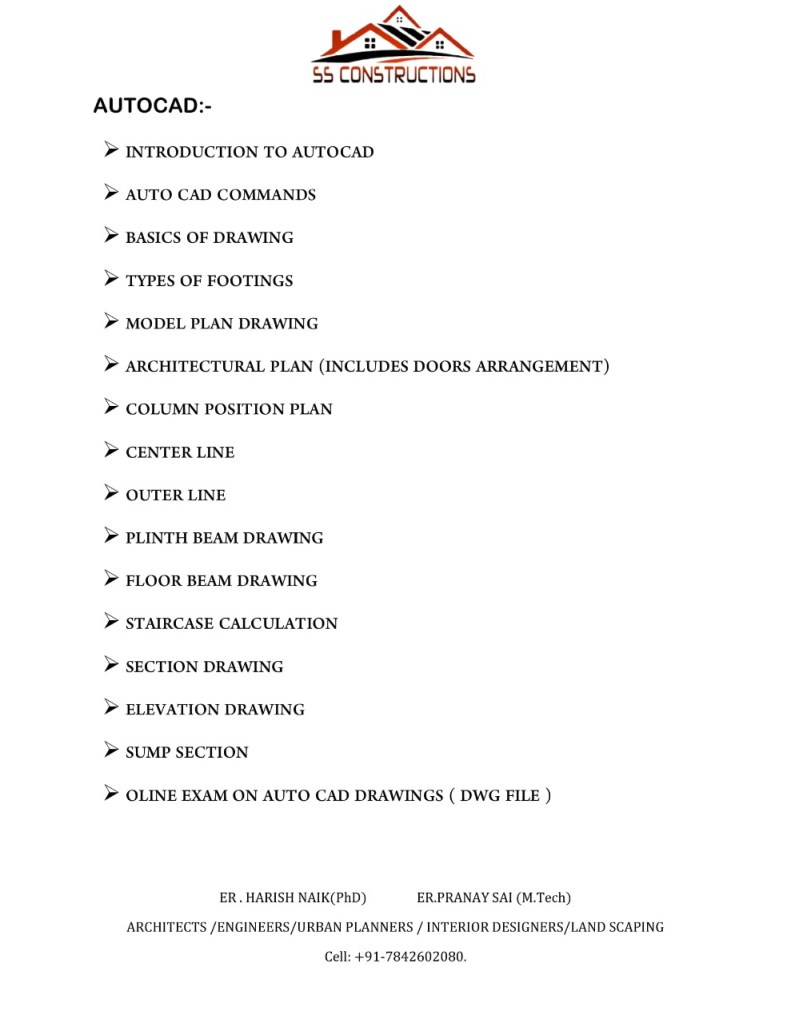
AutoCAD is widely used in the civil engineering field because of its ability to plan sites a lot easier then hand drawings. The main thing is that if you want to draft any civil engineering structure (2D, 3D) such as buildings, bridges, roads, drainage, pipeline, dams, intersection etc. with accuracy, speed and that can be easily edited, AutoCAD is the best option. I could talk for a day about the importance of AutoCAD, still may miss some of the points.
QUANTITY SURVEY
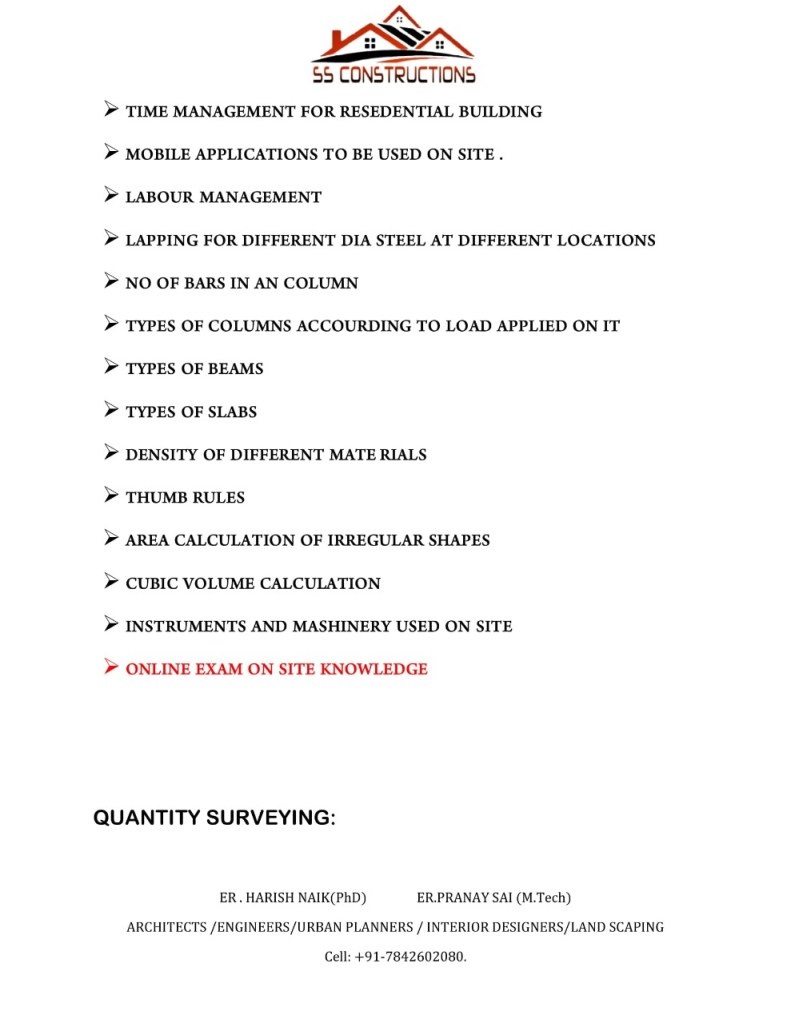
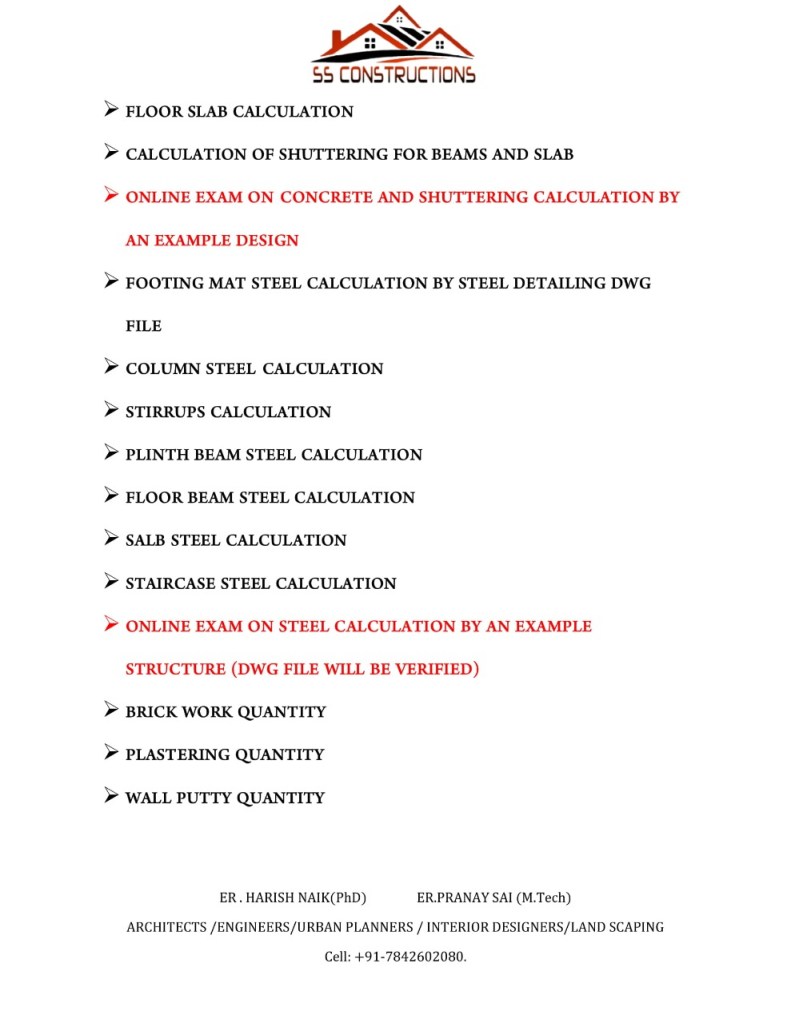
Quantity Surveying is therefore an essential feature of civil engineering and construction of infra projects. Based on the structure of each company and based on the requirements of clients, the role of a quantity surveyor changes
SITE KNOWLEDGE
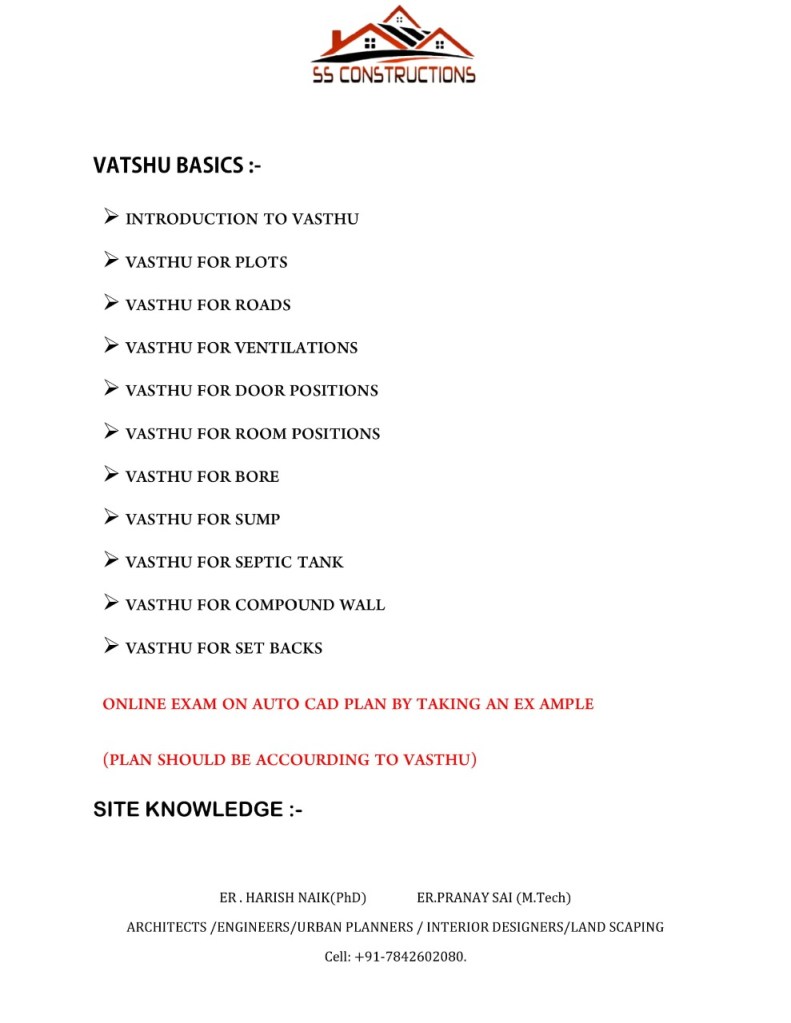
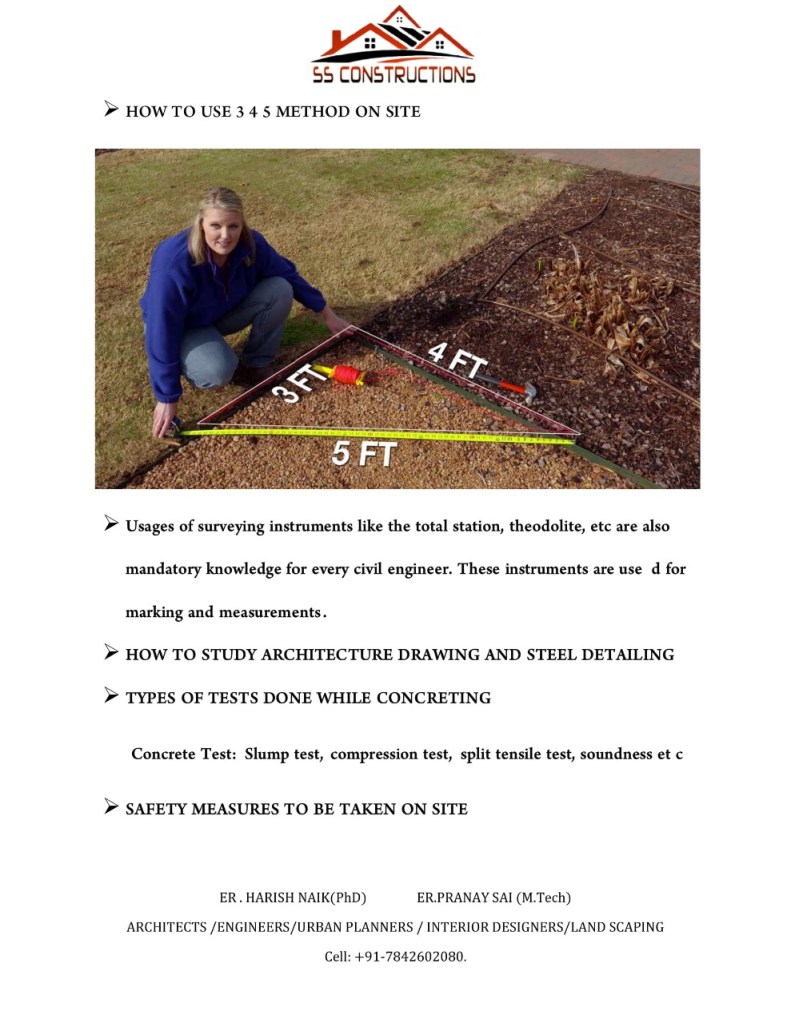
Civil engineer does many activities at construction site and there are certain works which are repetitive in nature. So, some points, tips and tricks which a civil engineer should remember for faster calculations as well as quick solutions to construction site problems.

When engineers and quantity surveyors discuss aesthetics and architects study what cranes do we are on the right road.
Ove Arup
AUTOCAD & QUANTITY SURVEYING
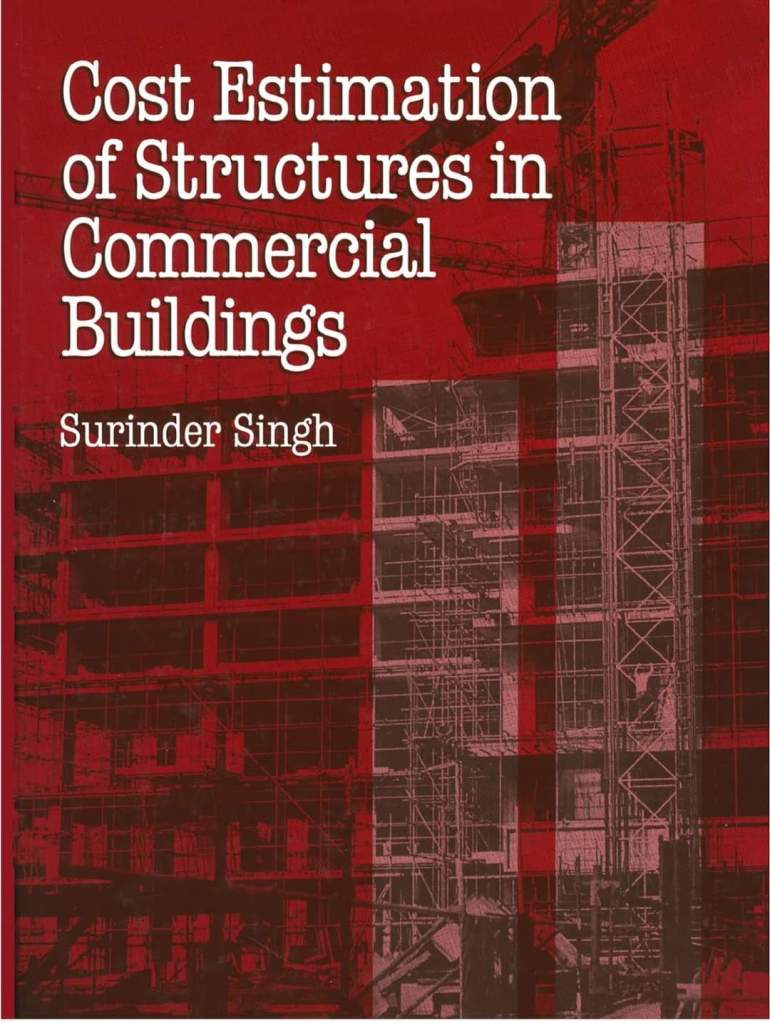
Approximate cost estimates for
structural works are always needed for one reason or another at the initial design stage in the building construction industry, and the techniques generally used for their preparation are the percentage estimate method, the superficial or floor area method (also known as the square metre method) and the approximate quantities method.
A proper application of the first two methods requires an in-depth knowledge of historical cost information of completed buildings and of the effect of design parameters on the construction cost.
Information on constituent quantities of completed buildings is not readily available. Realistic estimates may thus require the engineer to work out different schemes so that the most economical one may be selected. It is time-consuming and unsystematic if this has to be done for every project. With these drawbacks in mind, the author has supplied the basic data and discussed, in relation to commercial buildings ranging from 5 to 50 storeys, the effect of different design parameters on quantities of constituents for common structural systems, namely the reinforced concrete beam and slab system, the flat slab and waffle slab systems, and the prestressed concrete beam and reinforced concrete slab system. This approach to constituent quantities will enable both students and professionals to develop estimates with ease, speed and accuracy.
 AUTOCAD & QUANTITY SURVEYING Fee:5000/-